
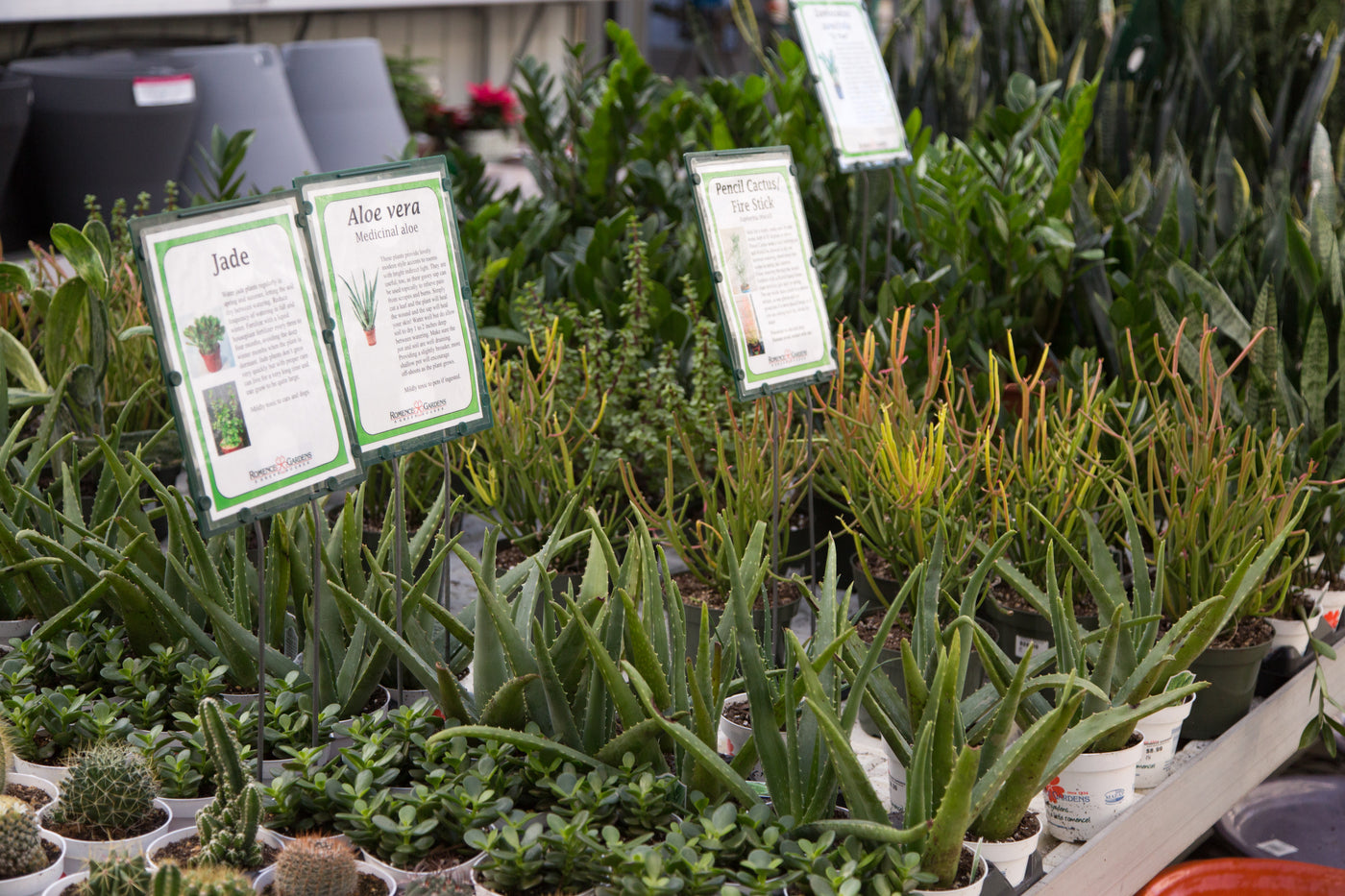

A Plant for Every Home
From tropical plants to succulents and cacti, our Houseplants Greenhouse carries a wide variety of houseplants to accommodate your needs. Whether you’re new to houseplants or a seasoned green thumb, we’re happy to help find the best fit for your space.
Inventory is not currently available online – call or check out our shop in person to see what plants we currently have in store.
Houseplants Shopping Guide
Before You Shop
Assess Your Space
Assess Your Space
Here are some helpful questions to consider before you visit:
- What kind of lighting is available in your space?
- What size plant/pot do you have room for?
- Do you have pets or children? (Check plant toxicity.)
What to bring with you:
- Photo(s) of your space and/or plant pot
Plant Shopping Guide
1. Pick a Plant
1. Pick a Plant
Here are some things to consider when choosing a new plant:
- Lighting - What lighting is available? (bright or low, direct or indirect light)
- Humidity - most plants need high humidity (50%+), but some (like cactus) prefer lower humidity
- Soil Type - check the acidity, absorbency, and fertilizing needs - Use our Romence Gardens Potting Soil as a great solution for indoor houseplants!
- Care Needs - some plants require more trimming/care than others
2. Pick a Pot
2. Pick a Pot
Look at these factors when selecting a pot for your plant:
- Material - Terra cotta pots are porous and breathable, allowing soil to dry out faster, which is good for plants that prefer drier conditions like succulents. Plastic pots are non-porous, retaining moisture longer, which is better for water-loving plants but can be a risk for overwatering.
- Size - Is there enough space in the pot for the roots to comfortably grow?
- Drainage - Pots without drainage can lead to root rot. Add drainage to plastic pots by drilling holes or use a removable plastic liner that can be drained after watering.
3. Use Our Potting Station
3. Use Our Potting Station
Ready to pot your plant? For smaller plants, head over to our Potting Station (located in the Houseplants Greenhouse) for soil, gravel, and other supplies. For larger plants or to use our repotting services, ask our staff for pricing and scheduling information.
New to plant care? Ask an associate for help or let us pot your plant for you!
4. Pay & Transport
4. Pay & Transport
After paying at the register, carefully transport your plant to its new abode. Be sure to give it a good watering and whisper some nice things to your new leafy friend!
Limited space in your vehicle for your new houseplant? Have us deliver it for you! Call or chat with one of our store associates for a quote and to schedule your delivery.
5. Home Sweet Home
5. Home Sweet Home
Enjoy your new plant! Be sure to check out our Plant Care & Upkeep for more information on trimming, fertilizing, repotting, and more.
Houseplants Warranty Information:
- Return within 24 hours for a full refund .
- Return within 30 days for exchange or in-store credit.
- Plant must be returned with proof of purchase.
- We are unable to accept returns if the plant was neglected.
Plants for Beginners
-

Golden Pothos
Pothos is an evergreen plant with thick, waxy, green, heart-shaped leaves with splashes of yellow. As a houseplant, it is commonly grown as a hanging plant.
Pictured: Golden Pothos
-

Monstera Deliciosa
Monstera deliciosa, commonly known as the Swiss cheese plant, is a tropical vine prized for its large, fenestrated (split or holey) leaves. It is relatively low-maintenance care, thriving in bright, indirect light.
-

Spider Plant
A spider plant is an herbaceous perennial that produces long "spiderettes," or plantlets, at their tips, which can be used to propagate new plants. These plants are prized for being low-maintenance, air-purifying, and adaptable to a range of indoor conditions.
-

Aglaonema
Aglaonema, or Chinese Evergreen, is a popular, low-maintenance houseplant known for its striking, patterned foliage in shades of green, silver, red, and pink. It thrives in low to bright, indirect light.
-

Heartleaf Philodendron
Philodendron hederaceum is a tropical perennial houseplant known for its trailing vines. This plant thrives in bright, indirect light and is low-maintenance, making it an ideal choice for indoor gardening.
-

Dieffenbachia
Dieffenbachia, or dumb cane, are relatively easy to care for, preferring bright, indirect light and well-draining soil. However, the plant is toxic if ingested, as its sap can cause swelling of the tongue and throat, so caution is needed around pets and children.
-

Peperomia
Peperomias area diverse genus of small, easy-care houseplants prized for their unique and varied foliage, which can be succulent-like, waxy, or thin, and come in many shapes and colors. Peperomias are often called "radiator plants" and are non-toxic to pets and humans.
-

Snake Plant
Sansevieria trifasciata or mother-in-law's tongue, is a hardy, low-maintenance houseplant characterized by its upright, sword-shaped leaves.
Pictured: Mikado Snake
-

ZZ Plant
The ZZ plant (Zamioculcas zamiifolia) is a popular, low-maintenance houseplant known for its resilience and adaptability.
-

Haworthia
Haworthias are small, popular succulents from southern Africa known for their easy care and unique, fleshy leaves that can be spotted, striped, or even translucent. They typically grow in a rosette shape and are well-suited as houseplants because they tolerate lower light conditions than many other succulents.
-

Cast Iron Plant
The Cast Iron Plant is a durable, low-maintenance evergreen perennial known for its ability to withstand harsh conditions, such as deep shade and neglect. This plant is a popular choice for low-light indoor spaces and can be used in shady outdoor areas.


Low-Light Plants
-

Arrowhead Plant
An arrowhead plant is a fast-growing vine, with distinctively shaped leaves that vary in color and pattern. It prefers bright, indirect light and thrives in high humidity and warm temperatures.
-

Nerve Plant
The Nerve Plant is a small, low-growing houseplant ideal for terrariums or as a groundcover due to its creeping habit and preference for high humidity, bright indirect light, and consistently moist soil. It is also non-toxic and pet-friendly.
-

Pothos
Pothos is an evergreen plant with thick, waxy, green, heart-shaped leaves with splashes of yellow. As a houseplant, it is commonly grown as a hanging plant.
Pictured: Neon Pothos
-

Tradescantia
Tradescantia, also known as inch plant or spiderwort, is is a fast-growing and easy-to-care-for plant that often has small, delicate flowers. These plants thrive in bright, indirect light and well-draining soil, and are easily propagated from stem cuttings.
-

Snake Plant
Sansevieria trifasciata or mother-in-law's tongue, is a hardy, low-maintenance houseplant characterized by its upright, sword-shaped leaves.
Pictured: Snake
-

ZZ Plant
The ZZ plant (Zamioculcas zamiifolia) is a popular, low-maintenance houseplant known for its resilience and adaptability.
Pictured: Raven ZZ
-
Peperomia
Peperomias area diverse genus of small, easy-care houseplants prized for their unique and varied foliage, which can be succulent-like, waxy, or thin, and come in many shapes and colors. Peperomias are often called "radiator plants" and are non-toxic to pets and humans.
-
Cast Iron Plant
The Cast Iron Plant is a durable, low-maintenance evergreen perennial known for its ability to withstand harsh conditions, such as deep shade and neglect. This plant is a popular choice for low-light indoor spaces and can be used in shady outdoor areas.
-
Aglaonema
Aglaonema, or Chinese Evergreen, is a popular, low-maintenance houseplant known for its striking, patterned foliage in shades of green, silver, red, and pink. It thrives in low to bright, indirect light.


Direct Sun Plants
-

Pencil Cactus (Euphorbia)
A pencil cactus, or Euphorbia tirucalli, is a succulent with thin, pencil-like, green stems that grow upright and can turn red or orange in bright, cool conditions. It is a low-maintenance plant that tolerates drought and heat, but its milky white sap is toxic and can cause skin irritation or vomiting if ingested. It thrives in full sun to partial shade.
-

Echeveria
Echeverias are popular, low-maintenance succulents known for their rosette-shaped leaves that come in a variety of pastel colors. They are drought-tolerant, store water in their fleshy leaves, and thrive in sunny, dry conditions with well-draining soil. Many are known for being easy to grow and are often called "Hens and Chicks".
-

Jade Plant
The Jade Plant is a slow-growing succulent with thick, oval-shaped leaves and a woody trunk. It is easy to care for, tolerating dry conditions and bright light, and is often seen as a symbol of good luck.
-

Kalanchoe
A Kalanchoe is a popular succulent houseplant known for its bright, long-lasting flowers and its thick, fleshy leaves. It is a low-maintenance plant that tolerates dry conditions and needs bright, indirect light. Kalanchoes can vary in size and shape, from compact and bushy to tree-like, and are popular for their vibrant blooms, especially around the holidays.
-

Bird of Paradise
The White Bird of Paradise (Strelitzia nicolai) is a tropical plant native to South Africa that thrives in bright, indirect light and prefers moist, well-drained soil with an acidic to neutral pH. It is relatively low-maintenance and can be grown indoors or outdoors in warm climates.
-

Snake Plant
Sansevieria trifasciata or mother-in-law's tongue, is a hardy, low-maintenance houseplant characterized by its upright, sword-shaped leaves.
Pictured: Mikado Snake
-

Cacti & Succulents
Cacti and succulents aredrought-tolerant houseplants that store water in their fleshy leaves, stems, or roots. They generally require bright, direct sunlight for at least 6 hours daily, though some varieties need partial shade, and they prefer well-draining soil and low humidity.
-

ZZ Plant
The ZZ plant (Zamioculcas zamiifolia) is a popular, low-maintenance houseplant known for its resilience and adaptability.


Low Humidity Plants (30% or Lower)
-

ZZ Plant
The ZZ plant (Zamioculcas zamiifolia) is a popular, low-maintenance houseplant known for its resilience and adaptability.
Pictured: Raven ZZ
-

Aloe Vera
Aloe vera isa succulent plant known for its thick, fleshy leaves containing a gel that is widely used topically for its soothing, moisturizing, and anti-inflammatory properties. It's a cultivated for its medicinal and cosmetic uses, and has a long history in various ancient cultures.
-

Snake Plant
Sansevieria trifasciata or mother-in-law's tongue, is a hardy, low-maintenance houseplant characterized by its upright, sword-shaped leaves.
Pictured: Snake
-
Most Succulents
Succulents generally thrive in humidity levels lower than 30%, as this mimics their native arid climates. The main risks are from over-watering, which can cause root rot in low-humidity conditions, and from cold temperatures, not the dry air itself.
-

Non-Tropical Cactus
Many types of non-tropical cacti thrive in low humidity environments because they are native to arid deserts.


Pet Safe Plants (Cats & Dogs)
-

Pilea
Pilea are popular, easy-to-care-for houseplants known for their unique leaves. The most common type, Pilea peperomioides or Chinese Money Plant, features circular, coin-shaped leaves that grow on long, slender stems, resembling lily pads. They thrive in bright, indirect light and prefer soil to dry out between waterings.
-

Money Tree
The Money Tree is a popular tropical houseplant known for its distinctive braided trunk and hand-shaped leaves, often gifted for good luck and prosperity. It is easy to care for and thrives in bright, indirect light.
-

Stromanthe
Stromanthe are exotic-looking plants known for their "prayer plant" behavior, folding their leaves up at night and moving them to track the sun during the day. While they can be slow-growing, they are a popular choice for indoor spaces and can be used as a table plant or a floor plant as they mature.
-

Calathea
Calatheas, also known as "prayer plants," arehouseplants with striking, patterned leaves that fold up at night. They are native to tropical rainforests and prefer medium, indirect light, high humidity, and consistent moisture
-

Moth Orchid
Moth Orchids are a type of orchid popular as houseplants, known for their long-lasting, flat flowers that resemble moths in flight. They are epiphytic, meaning they naturally grow on trees rather than in soil. These plants are relatively easy to care for, with broad, leathery leaves and a short stem, and are available in a wide variety of colors and sizes.
-
Peperomia
Peperomias area diverse genus of small, easy-care houseplants prized for their unique and varied foliage, which can be succulent-like, waxy, or thin, and come in many shapes and colors. Peperomias are often called "radiator plants" and are non-toxic to pets and humans.
-

True Palms
A true palm houseplant is a type of palm from the Arecaceae family, known for its large, fan or feather-shaped fronds at the top of an unbranched stem, adding a tropical look to an indoor space. These plants are generally slow-growing and relatively easy to care for, requiring bright, indirect light and moist soil with good drainage.
-
Spider Plant
A spider plant is an herbaceous perennial that produces long "spiderettes," or plantlets, at their tips, which can be used to propagate new plants. These plants are prized for being low-maintenance, air-purifying, and adaptable to a range of indoor conditions.
-
Cast Iron Plant
The Cast Iron Plant is a durable, low-maintenance evergreen perennial known for its ability to withstand harsh conditions, such as deep shade and neglect. This plant is a popular choice for low-light indoor spaces and can be used in shady outdoor areas.
-

African Violet
African Violets are a popular, low-growing houseplant known for its rosette of fuzzy leaves and frequent, colorful blooms. It thrives indoors with bright, indirect light and can be grown under artificial lights, making it an excellent choice for indoor decoration. They require well-draining soil and careful watering to avoid getting the leaves wet, which can cause damage.
-

Prayer Plant
A Maranta, or prayer plant, is a tropical plant known for its oval-shaped, patterned leaves that fold up at night like praying hands. It requires bright, indirect light, consistent watering (using filtered water is best), and high humidity to thrive.
-

True Ferns
True ferns are ancient, non-flowering vascular plants that reproduce with spores instead of seeds. They have complex leaves called fronds, true roots, and stems (rhizomes). A key characteristic is their "alternation of generations" life cycle, which includes a large leafy sporophyte (the part we see) and a smaller, independent gametophyte stage.
-
Haworthia
Haworthias are small, popular succulents from southern Africa known for their easy care and unique, fleshy leaves that can be spotted, striped, or even translucent. They typically grow in a rosette shape and are well-suited as houseplants because they tolerate lower light conditions than many other succulents.
-
Echeveria
Echeverias are popular, low-maintenance succulents known for their rosette-shaped leaves that come in a variety of pastel colors. They are drought-tolerant, store water in their fleshy leaves, and thrive in sunny, dry conditions with well-draining soil. Many are known for being easy to grow and are often called "Hens and Chicks".


Plant Care Tips & Tricks
General Care
General Care
Watering – check it like a brownie – stick finger in to check moisture levels of the soil – if dry, time to water! Uncertain? Pick up a moisture meter to check the saturation for you.
Watering methods – different plants require different care – some plants prefer bottom-watering, where the roots soak up the water to prevent leaves from getting wet. For top watering, be sure to water underneath the foliage to ensure proper saturation of the soil – keep watering until you see drainage coming out of the bottom of the pot. Remember – it is better to water thoroughly less often rather than little water frequently.
Fertilizing – It’s best to fertilize during the growing season between April and October. This provides extra nutrients to your plant while it is supported by the warmer environment. We recommend Osmocote as a great option for most houseplants.
Trimming & Repotting
Trimming & Repotting
When to trim – Many plants prefer regular pruning to keep a full shape. Many trimming needs and methods are plant-specific, but online tutorials are available for most houseplants. See Houseplants Resource Center with more information here.
When to repot – As plants grow, they will eventually use up the space and soil within the pot. Here are some things to look for:
- Root crowding/binding – Roots will appear out of the bottom drainage holes – pull the plant out to assess the ratio of roots to soil – there should be more soil than roots. If roots are bound too tightly, consider moving to a larger pot with fresh soil.
- Needs fresh soil – Soil should be replaced at least every few years or when it becomes hydrophobic to replenish nutrients. Check out our Romence Gardens Potting Soil as a great solution for most houseplants.
- Drainage issues – If you plant is showing signs of root rot, dehydration, or if you notice water is not draining properly, consider switching to a pot with better drainage, drilling new hole, or adding a liner pot or a layer of LECA at the bottom of your pot.
Let us repot your plant for you! Drop it off at the Greenhouse for our experts to help assess, select materials for, and repot your plants.
Pest Control & Health Issues
Pest Control & Health Issues
Assessment & Treatment
- Regularly monitor and check your plants for health issues or pests – including the undersides of leaves and soil surfaces.
- If you find pests, isolate the affected plant to prevent the spread to other plants.
- Maintaining healthy plants through proper watering, feeding, and light conditions can help prevent pest infestations. Stressed plants are more susceptible to pests.
Our Favorite Pest Solutions
Here are some of our favorite pest solutions available in our store:
- Captain Jack’s DeadBug Brew (organic) – multiple treatments, less stress on the plant
- BioAdvanced 3-in-1 Insect, Disease, & Mite Control (Systemic) – strong treatment 1x/mo
- Bonide Systemic Granules – takes about 2 weeks to get into plant’s system – works like a vaccine
- Captain Jack’s Neem Oil – must contact and coat pest directly – best when wiped off after treatment
- Mineral Oil – similar to Neem Oil, but does not last as long
- Potassium Salts, & Fatty Acids Spray (PSFAS) – kills and dissolves pests on contact
- Diatomaceous Earth – fine powder silica that shreds and dehydrates pests that pass through it
- Mosquito Tea – how to make! (link)
The Pests
- Mealybug – BioAdvanced 3-in-1, Neem Oil, & PSFAS
- Scale – BioAdvanced 3-in-1, Neem Oil, & PSFAS
- Spider mites – DeadBug, BioAdvanced 3-in-1, & Neem Oil
- Thrips – DeadBug, BioAdvanced 3-in-1, & Neem Oil
- Aphids – DeadBug, BioAdvanced 3-in-1, Neem Oil, & PSFAS
- Fungus/soil gnats – Diatomaceous Earth, Mosquito Tea, Light or sticky traps
Fungus & Disease
- Powdery mildew – Copper Fungicide, Sulfur Fungicide (for succulents)
- Root rot – Root rot can happen when roots remain too wet for too long, possibly due to lack of drainage. The roots will soften and disintegrate – trim affected roots, sterilize with peroxide (if needed), and repot into dry soil.
- Mosaic virus – This virus is on the rise in the U.S., but currently only affects certain species of plant – no treatment available – plant must be burned and kept sterile from others to prevent spreading.
Have a sick plant? Send a photo to retail@romencegardens.com for an assessment and suggested solutions.